English
 中文简体
 русский
 0

Content
- 1 Aluminium Door Hardware: Material Properties and Why They Matter
- 2 Aluminium Door Handle: Types, Standards, and Selection Criteria
- 3 Aluminium Door Hinge: Load Ratings, Hinge Types, and Specification Requirements
- 4 Door Lock Body: Internal Mechanism, Standards, and Compatibility
- 5 Complete Hardware Set Specification: Matching Handle, Hinge, and Lock Body
- 6 Frequently Asked Questions
- 6.1 1. What is the difference between Aluminium Door Hardware and stainless steel door hardware?
- 6.2 2. How many aluminium door hinges does a standard door need?
- 6.3 3. What PZ measurement do I need for my aluminium door handle?
- 6.4 4. Can an aluminium door hinge be used on a fire door?
- 6.5 5. What backset should I order for a tubular latch Door Lock Body?
- 6.6 6. How do I prevent galvanic corrosion between aluminium door hardware and a steel door frame?
- 6.7 7. What is the Door Lock Body cycle rating and why does it matter?
- 6.8 8. How do I clean and maintain an aluminium door handle?
- 6.9 9. What is the difference between a mortise lock body and a rim lock body?
- 6.10 10. Can I use an aluminium door handle on a uPVC door with a multipoint lock?
Aluminium Door Hardware is the most practical material choice for the majority of modern door installations because it combines genuine corrosion resistance, low weight, precise manufacturing tolerances, and a wide range of surface finishes that suit both residential and commercial architectural requirements without the rust risk of steel or the cost of solid brass. Across the three core hardware categories — the aluminium door handle, the aluminium door hinge, and the Door Lock Body — aluminium delivers consistent performance across the full range of interior and exterior door applications when specified at the correct alloy grade and surface treatment for the exposure conditions.
The practical answer to which specific product to choose within each category depends on three variables: the door type and weight (which determines the load rating needed for hinges and lock bodies), the exposure environment (interior, exterior, coastal, or high humidity commercial), and the architectural finish requirement (anodised natural, powder coated, or brushed mechanical finish). The sections below address each of the three hardware categories in full practical detail, with specification data and selection criteria that allow builders, architects, and homeowners to make informed decisions rather than relying solely on product appearance.
Aluminium Door Hardware: Material Properties and Why They Matter
Aluminium Door Hardware performs reliably in outdoor and high humidity environments because aluminium forms a stable, self sealing oxide layer on its surface when exposed to air. This natural passivation layer prevents ongoing corrosion of the underlying metal without requiring any applied protective finish, making it fundamentally different from steel hardware where the iron oxide (rust) that forms at the surface is porous and continues corroding through the metal thickness if not stopped by a coating. In practical terms, uncoated aluminium hardware exposed to rain and humidity will not rust, pit, or structurally degrade in the way that untreated iron or steel does under the same conditions.
Alloy Grades Used in Aluminium Door Hardware
Not all aluminium is equal in strength, machinability, and corrosion resistance. The alloy designation of the aluminium used in Aluminium Door Hardware determines its mechanical properties and suitability for load bearing applications such as hinges and lock bodies:
- 6063 alloy (architectural grade): The most common alloy used in extruded aluminium door hardware profiles, including handle backplates, hinge leaves, and frame components. 6063 offers a tensile strength of 145 to 186 MPa in T5 temper, excellent extrudability that allows complex profile shapes with thin walls, and very good anodising response that produces consistent, dense anodic oxide layers for high quality surface finishes. It is the standard alloy for interior and light commercial Aluminium Door Hardware applications.
- 6061 alloy (structural grade): Higher strength than 6063, with tensile strength of 241 to 310 MPa in T6 temper. Used in load bearing components of Aluminium Door Hardware that must sustain high cyclic loads, including heavy duty hinges for doors above 80 kg, commercial grade door closers with aluminium bodies, and lock cases subject to high frequency use cycles. Slightly more difficult to extrude into complex profiles than 6063 but the preferred alloy where structural performance is the priority over profile complexity.
- ADC12 aluminium die cast alloy: Used for cast aluminium components in Aluminium Door Hardware such as lock body cases, escutcheon plates, and decorative handle knobs where complex three dimensional forms are required that cannot be produced by extrusion. ADC12 has lower tensile strength than wrought 6061 but adequate for most door hardware casting applications, and its fine casting grain structure accepts polished and anodised finishes well.
Surface Finish Options for Aluminium Door Hardware
The surface finish of Aluminium Door Hardware affects both its visual character and its long term surface durability. The principal finish types available are:
- Anodised natural (silver): An electrochemical process that converts the aluminium surface layer to a hard aluminium oxide coating 10 to 25 micrometres thick, depending on the anodising class. Class 25 anodising (25 micrometre thickness) is the standard for exterior architectural hardware and provides the highest abrasion and corrosion resistance in the anodised finish range. Anodised aluminium door hardware rated to Class 25 or AA A25 specification will withstand 1,000 hours of neutral salt spray exposure without pitting or surface degradation, making it appropriate for exposed exterior and coastal applications.
- Powder coat finish: A thermoset polymer coating applied electrostatically to the aluminium surface and cured at 180 to 200 degrees Celsius, producing a hard, impact resistant surface available in any RAL colour. Powder coating on Aluminium Door Hardware adds colour versatility beyond the limited palette of anodising, but requires intact coating continuity to protect the aluminium at scratched or chipped areas. Quality powder coating on door hardware is specified at 60 to 80 micrometre minimum dry film thickness.
- Brushed mechanical finish: A directional satin texture applied by abrasive belt or wire brush before anodising or clear lacquering, producing a matte metallic appearance that hides minor surface marks from regular use better than a polished finish. The most widely specified finish for contemporary architectural Aluminium Door Hardware in commercial and high end residential applications.
- Mill finish (uncoated): The natural extruded or cast surface without additional treatment. Suitable only for concealed hardware applications (hidden hinges inside door frames, internal lock body cases) where surface appearance is not visible in the installed condition.
Aluminium Door Handle: Types, Standards, and Selection Criteria
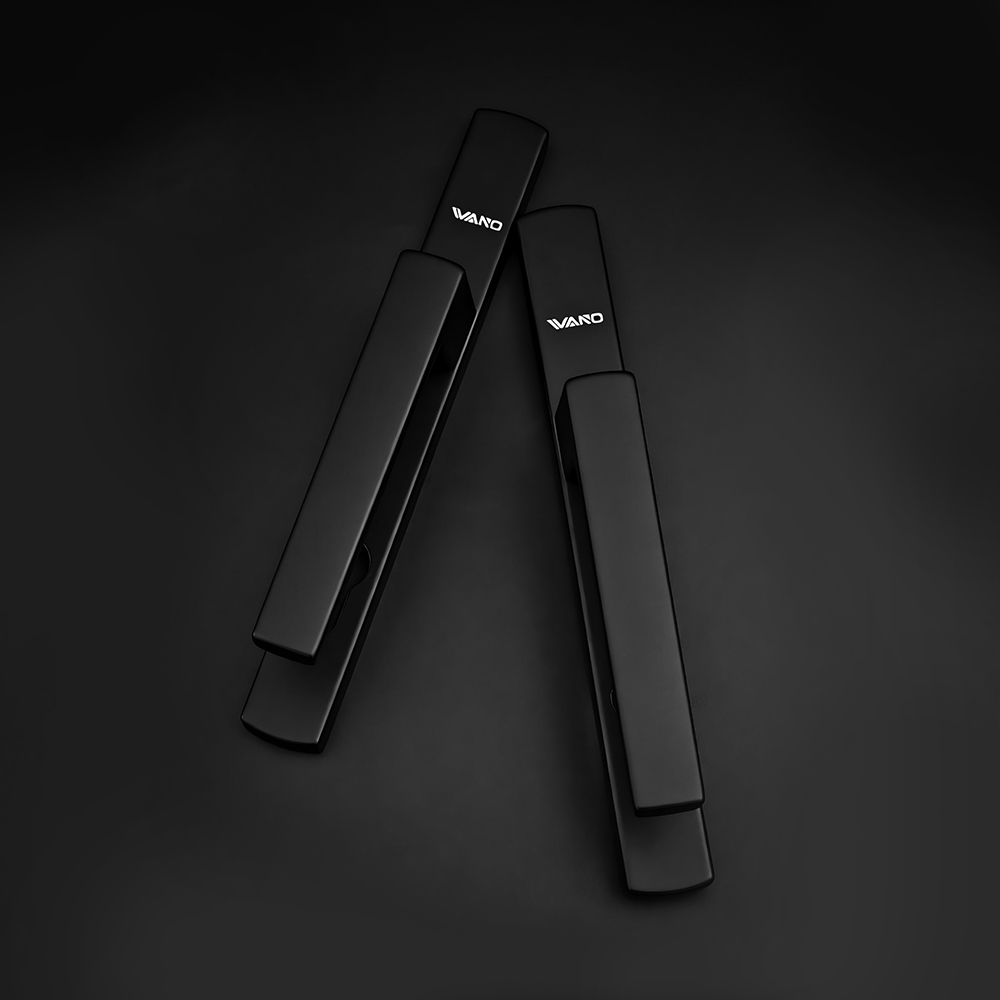
The aluminium door handle is the primary contact point between the user and the door, and its selection must balance ergonomic performance, mechanical durability under daily use cycles, and architectural visual character. A quality aluminium door handle must sustain a minimum of 200,000 to 500,000 operation cycles (opening and closing movements) over its service life in a commercial building application — a performance standard that distinguishes hardware grade aluminium handles from decorative or budget products that may look identical but fail significantly earlier under daily commercial use loads.
Lever Handle vs Pull Handle: Which Format for Which Door
The two primary formats of aluminium door handle are the lever handle (which operates a latch or lock mechanism through a rose or backplate connection) and the pull handle (a fixed bar or grip used on doors that push or pull open without a latch mechanism):
- Lever handle on backplate or rose: The standard aluminium door handle format for residential interior doors, office doors, and light commercial doors equipped with a tubular or mortise latch. The lever depresses the latch bolt when pushed down, allowing the door to open. Lever handles are available on square backplates (more contemporary architectural character), circular roses (traditional and transitional styles), and narrow escutcheon plates (for fire door and security door installations where the keyhole must be incorporated in the backplate assembly). Lever return springs are incorporated in the handle spindle connection to ensure the lever returns to horizontal after each operation — spring failure is the most common mechanical fault in budget lever handles after extended use.
- D pull and bar pull handles: Fixed aluminium door handle formats used on glass entrance doors, sliding doors, pivot doors, and any door where the opening force is provided by the user pulling or pushing directly rather than through a latch mechanism. D pull handles (a curved bar returning to a backplate at both ends) and straight bar pulls (a straight tubular bar projecting from the door face on standoffs or end brackets) are the most common formats in contemporary commercial and institutional architecture. Projection distance (the distance the handle projects from the door face) is a key ergonomic specification: a minimum projection of 40 mm is required for comfortable grip without knuckle contact with the door surface, with 55 to 65 mm projection being the standard for adult hand clearance in commercial applications.
Key Dimensions and Standards for Aluminium Door Handle Selection
| Handle Type | Standard Backset or Projection | Spindle Size | Cycle Rating (commercial) | Typical Application |
|---|---|---|---|---|
| Lever on backplate | 60 mm or 70 mm PZ (spindle centres to key centre) | 8 mm square | 200,000 cycles minimum | Interior residential and office doors |
| Lever on rose | 38 mm to 54 mm rose diameter | 8 mm or 10 mm square | 200,000 cycles minimum | Residential interior, fire doors |
| D pull handle | 150 mm to 600 mm centre to centre fixing | N/A (fixed pull) | 500,000 cycles minimum | Glass entrance doors, pivot doors |
| Bar pull handle | 300 mm to 1,800 mm bar length | N/A (fixed pull) | 500,000 cycles minimum | Commercial entrance, institutional |
Accessibility Compliance for the Aluminium Door Handle
Building codes and accessibility standards in most countries specify minimum ergonomic requirements for aluminium door handle design in public buildings and accessible residential construction. The key requirements under standards such as ADA (USA), BS 8300 (UK), and AS 1428 (Australia) include:
- Lever handles must be operable with a closed fist (without requiring tight grasping, pinching, or twisting), which excludes round knob handles from compliant accessible door hardware specifications.
- Handle height must be installed between 900 mm and 1,100 mm above finished floor level to be within reach range for wheelchair users.
- The maximum operating force to unlatch and open a door must not exceed 22 Newtons (approximately 2.2 kilograms force) for accessible routes, which has implications for the latch spring tension in the Door Lock Body and the door closer closing force, in addition to the handle design itself.
Aluminium Door Hinge: Load Ratings, Hinge Types, and Specification Requirements
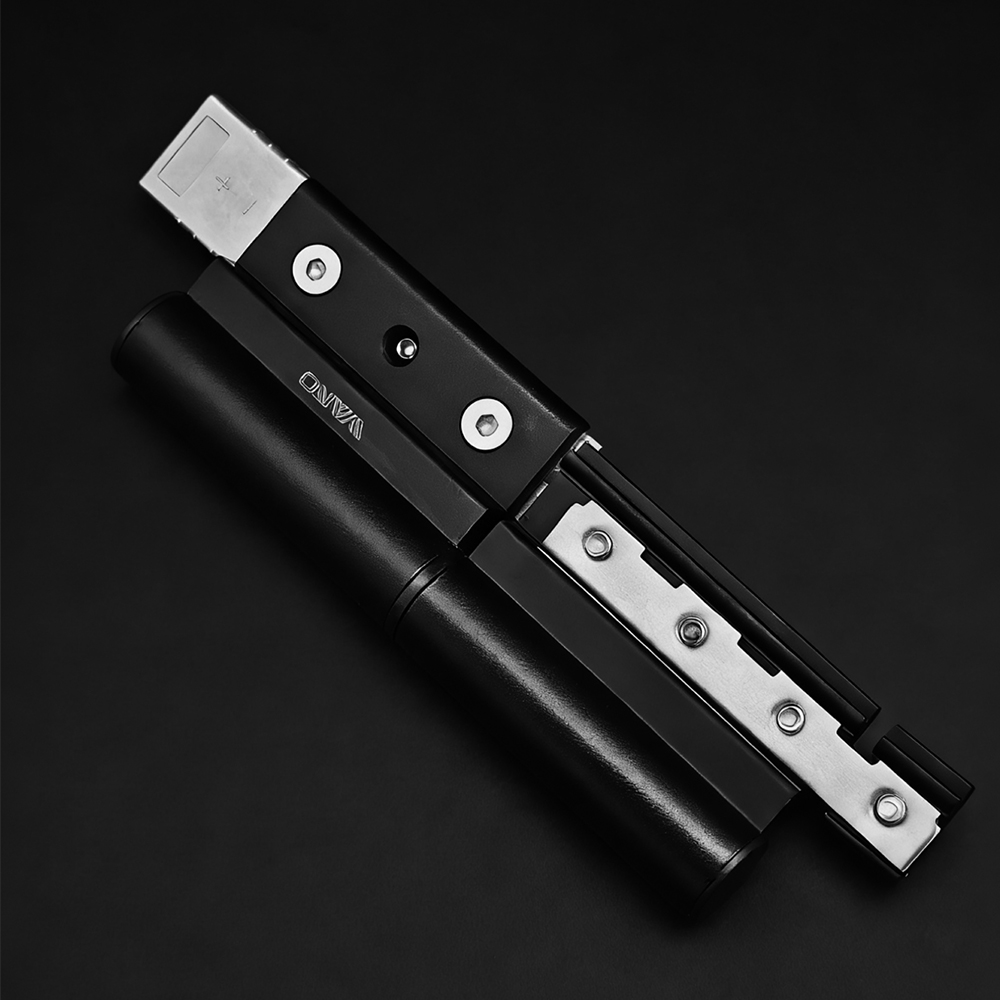
The aluminium door hinge is the structural pivot component of the door assembly, bearing the full weight of the door leaf through its working life while allowing smooth rotational movement at every operation cycle. A correctly specified aluminium door hinge is invisible in use — it opens and closes the door precisely, holds it in any open position without drooping, and requires no adjustment across years of regular operation. An incorrectly specified or undersized aluminium door hinge causes the door to sag, bind against the frame, transmit vibration noise at the hinge knuckle, and eventually fail structurally at the screw holes or barrel weld under the accumulated fatigue loading of repeated use.
Hinge Size and Load Capacity Selection
The size of an aluminium door hinge (height of the hinge leaf in millimetres, and leaf width when open) directly determines the moment arm available to support the door's weight at a given distance from the frame edge, and therefore the allowable door weight for a given number of hinges per door. The standard selection rules are:
- 75 mm hinge: Suitable for lightweight interior doors up to 25 kg with standard 35 mm door thickness. Minimum 2 hinges per door.
- 100 mm hinge: The most common size for standard residential and light commercial doors, rated for doors up to 60 kg at 40 to 45 mm thickness with 3 hinges per door. A 100 mm aluminium door hinge in 6063-T5 alloy with a 10 mm diameter steel knuckle pin (the pin must be steel for hardness even in an aluminium hinge, as an aluminium pin in an aluminium barrel wears rapidly) provides approximately 50,000 to 100,000 full open and close cycles before measurable wear develops at the barrel bearing surface.
- 125 mm hinge: Used for heavier interior doors (60 to 100 kg) and standard exterior doors. 3 hinges per door minimum; 4 hinges recommended for doors above 80 kg or doors with door closers that apply significant closing force.
- 150 mm and above: Heavy commercial and industrial doors above 100 kg, fire doors with intumescent seals that increase closing resistance, and external doors in high wind exposure locations where the wind load on the open door adds to the static weight load on the hinges.
Butt Hinge vs Continuous Hinge vs Concealed Hinge
The three principal formats of aluminium door hinge serve different structural and aesthetic requirements:
- Butt hinge (standard mortise hinge): Two rectangular leaves joined by a knuckle and pin barrel, mortised flush into the door edge and frame rebate so the leaves are concealed within the door thickness when the door is closed. The standard aluminium door hinge format for the vast majority of residential and commercial installations. Available in fixed pin (permanent assembly) and loose pin (pin removable for door removal without disturbing the screw fixings) configurations. Loose pin butt hinges should not be used on outward opening external doors, as the pin can be removed from the outside to defeat the door security without engaging the lock.
- Continuous hinge (piano hinge): A full length hinge running the complete height of the door, distributing the door load across the entire door height rather than concentrating it at two or three point hinge locations. The continuous aluminium door hinge eliminates the stress concentration at individual hinge screw positions that causes hinge screw pullout failure on heavy doors with point hinges, making it the preferred format for very heavy solid timber doors, aluminium framed glass doors, and cabinet and access panel applications requiring high load capacity in a narrow hinge leaf width.
- Concealed or hidden hinge (European or cup hinge): A hinge system where both leaves are recessed into the door face and frame face respectively, making the hinge completely invisible when the door is closed. Used primarily in cabinet and furniture applications and increasingly in architectural interior door installations where a completely clean door face aesthetic is required. Concealed hinge systems for full size doors require a heavier duty specification than standard cabinet cup hinges, with dedicated architectural concealed hinges rated for door weights of 40 to 80 kg available from specialist hardware suppliers.
Stainless Steel vs Aluminium Hinge Pins and Bearings
A detail that significantly differentiates quality from budget aluminium door hinge products is the material used for the knuckle pin and any bearing inserts at the barrel interface. A quality aluminium door hinge uses a stainless steel or case hardened steel pin running in a nylon or stainless steel bearing bush within the aluminium barrel, which prevents the direct aluminium on steel wear that would occur if the pin ran directly in the aluminium barrel bore. Direct aluminium to pin contact wears the softer aluminium barrel bore rapidly under the cyclical load of door opening and closing, producing the characteristic knocking and loose feel of a worn hinge within 2 to 3 years of use on a frequently operated door. Ball bearing hinge variants incorporate stainless steel ball races at the barrel interface for the smoothest operation and longest wear life, and are specified for high frequency commercial door applications and fire doors where smooth, consistent operation under door closer spring force is required at every cycle.
Door Lock Body: Internal Mechanism, Standards, and Compatibility
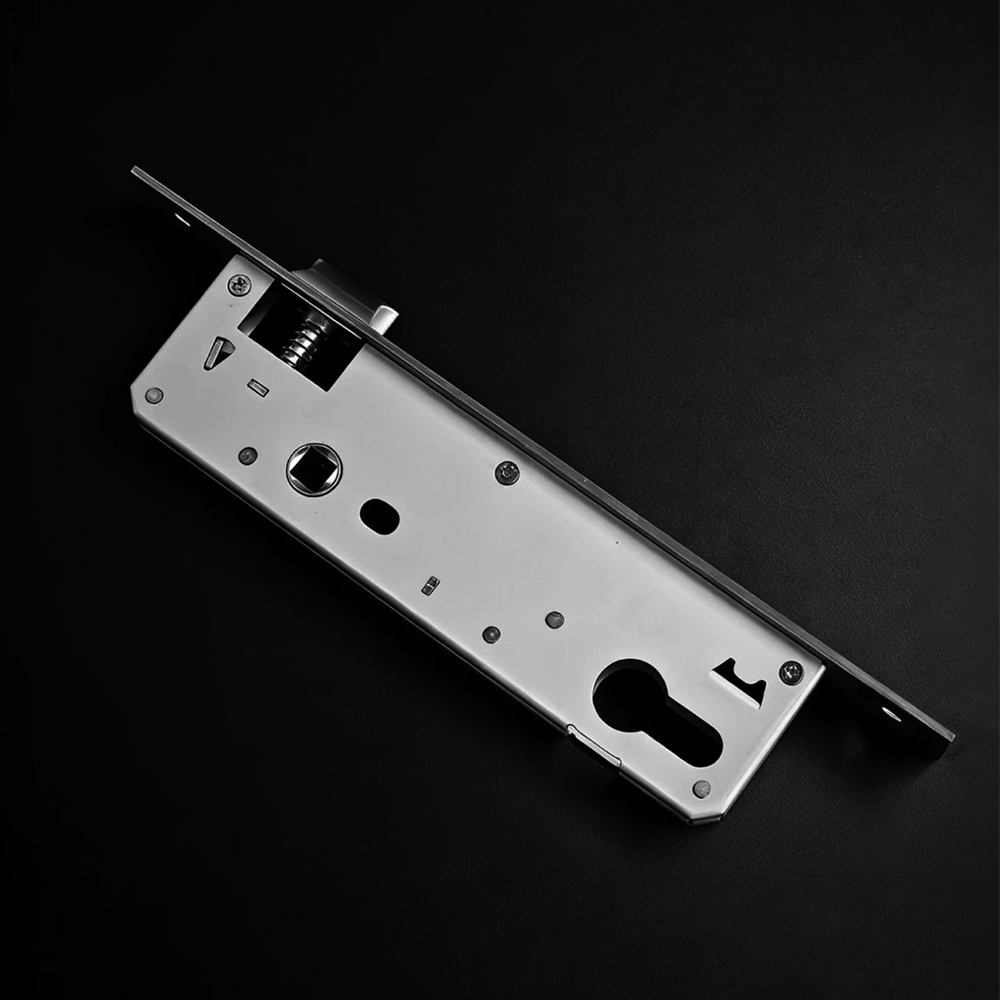
The Door Lock Body (also called a lock case or lock set body) is the internal mechanical assembly that houses the latch bolt, deadbolt, strike interface mechanism, and key or thumb turn actuating components within the door thickness. While the aluminium door handle and aluminium door hinge are externally visible components, the Door Lock Body is concealed within the door, yet it is the component that determines whether the door actually secures correctly, operates smoothly over its service life, and meets the security standard required for the installation.
Mortise Lock Body vs Tubular Latch: Which Format for Which Application
The two primary Door Lock Body formats used in residential and commercial door installations are:
- Tubular latch (cylindrical latch body): A compact cylindrical Door Lock Body that fits into a 57 mm or 63 mm diameter drilled hole in the door face, with the latch bolt projecting from the door edge through a rectangular faceplate hole. The tubular latch contains only the spring loaded latch bolt and its retraction mechanism (operated by the handle spindle) — it does not contain a deadbolt or key cylinder, which are provided by separate components if required. Tubular latches are used for interior passage doors (no locking required), bathroom privacy doors (thumb turn locking), and in combination with separate mortise deadbolts on exterior doors where the latch and deadbolt functions are provided by separate lock cases rather than one combined unit. Installation requires only a face hole drill, a latch bolt edge chisel, and the correct backset measurement (the distance from the door edge to the centre of the face hole — standard backsets are 60 mm and 70 mm in European markets, 2.375 inch and 2.75 inch in North American markets).
- Mortise lock body: A rectangular Door Lock Body fitted into a mortise pocket cut into the door edge, containing both the spring latch bolt and the deadbolt in a single unit, along with the lever spindle follower, the key cylinder cam connection, and in higher specification models, an anti thrust deadlatch feature that prevents the latch bolt from being pushed back by a knife or shimming tool even when the handle is not operated. The mortise lock body provides a significantly higher security level than the tubular latch because the rectangular case distributes its fixing load over a larger door cross section area, and the integrated deadbolt provides positive locking that the tubular latch alone cannot. A European standard mortise lock body to EN 12209 in Grade 3 or above provides a minimum 100,000 full operation cycles (latch and deadbolt combined) and a deadbolt throw of 13 mm minimum, the standard requirement for residential external door security in the UK, Germany, and most of the European market.
Door Lock Body Case Material and Durability
The case of the Door Lock Body is most commonly made from one of three materials, each with different implications for durability, corrosion resistance, and cost:
- Steel case: The standard for mortise lock bodies in commercial and security grade applications. Steel provides the structural resistance to forced entry attack (drilling, prying, and impact) that is tested under standards such as EN 1630 and ANSI Grade 1. Steel lock cases are heavier than aluminium equivalents and require protective finishing (zinc plating, powder coating, or epoxy coating) to resist corrosion in humid environments. The internal mechanism components (latch cam, deadbolt driver, spring followers) are also typically steel, contributing to the full case weight of 300 to 600 grams for a standard mortise lock body.
- Die cast aluminium case: Used in the Door Lock Body for mid range residential and light commercial applications where full steel attack resistance is not required. ADC12 die cast aluminium provides adequate case strength for residential use, significantly lower weight than steel, and better corrosion resistance without finishing. Die cast aluminium lock cases are the standard for aluminium framed door systems (folding doors, sliding door locks, aluminium entrance door hardware sets) where the architectural framework is aluminium and a steel lock case would introduce a dissimilar metal corrosion risk at the frame contact points.
- Zinc alloy (Zamak) case: Used in budget residential lock bodies. Lower structural strength than steel or 6061 aluminium, more prone to cracking under impact attack, and with lower cycle life at the internal mechanism bearing surfaces. Zinc alloy lock cases are identifiable by their higher weight relative to aluminium cases of the same size (zinc alloy density is approximately 6,600 kilograms per cubic metre, versus 2,700 for aluminium and 7,850 for steel) and their tendency to show white powdery corrosion at surface pores after extended exposure to humidity.
Backset, Case Dimensions, and Compatibility With the Aluminium Door Handle
When specifying a Door Lock Body to work with a chosen aluminium door handle, the following dimensional compatibility checks must be confirmed before ordering:
- Backset match: The backset of the lock body (the distance from the door edge to the spindle hole centre) must match the PZ measurement of the handle backplate — the distance from the spindle hole centre to the key cylinder hole centre. European standard PZ dimensions are 72 mm (most common), 92 mm, and 107 mm. A handle backplate specified for 72 mm PZ must be used with a lock body whose latch spindle and key cylinder positions are also spaced 72 mm apart.
- Spindle size: The drive spindle of the aluminium door handle must match the follower aperture in the Door Lock Body. Standard spindle sizes are 8 mm square (residential), 9 mm square, and 10 mm square (commercial and heavy duty). Using an 8 mm spindle in a 10 mm follower produces a loose, rattling connection that wears rapidly; using a 10 mm spindle in an 8 mm follower prevents assembly entirely.
- Door thickness range: The Door Lock Body must be specified for the actual door thickness of the installation. Mortise lock cases are typically designed for door thickness ranges of 35 to 45 mm (light residential), 45 to 55 mm (standard residential and light commercial), or 55 to 75 mm (heavy commercial and fire doors). The faceplate height and mechanism depth must fit within the available door thickness without the case projecting beyond the door face on either side.
Complete Hardware Set Specification: Matching Handle, Hinge, and Lock Body
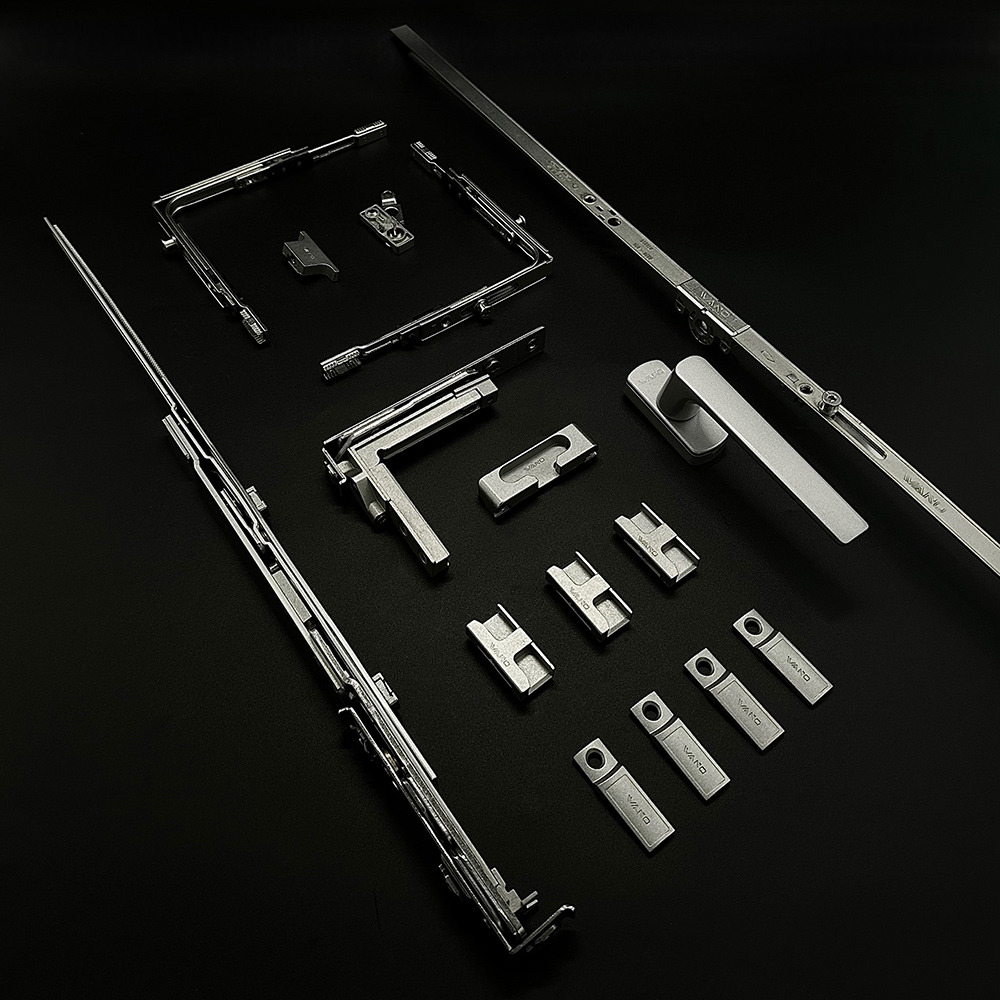
Specifying Aluminium Door Hardware as a coordinated set — matching the aluminium door handle, aluminium door hinge, and Door Lock Body as a system rather than purchasing each component independently from different suppliers — reduces the risk of dimensional incompatibility and produces a visually consistent installation where all hardware components share a common finish, style language, and quality level.
| Door Application | Recommended Handle | Recommended Hinge | Recommended Lock Body | Finish |
|---|---|---|---|---|
| Residential interior passage | Lever on rose, 8 mm spindle | 100 mm butt hinge x3 | Tubular latch, 60 mm backset | Anodised silver or brushed |
| Residential exterior entry | Lever on backplate, 72 mm PZ | 125 mm butt hinge x3 | Mortise lock body, EN 12209 Grade 3 | Class 25 anodised or powder coat |
| Commercial office entry | Lever on backplate, 92 mm PZ | 125 mm ball bearing hinge x3 | Steel case mortise lock, 200,000 cycles | Brushed anodised or RAL powder coat |
| Glazed entrance door | Bar pull, 600 mm length | Continuous hinge or 150 mm butt x4 | Panic exit device or deadbolt only | Polished or satin anodised |
| Fire rated door (FD30 or FD60) | Lever on intumescent backplate | 100 mm CE certified fire hinge x3 min | CE marked mortise lock for fire doors | As specified, CE marked hardware only |
Frequently Asked Questions
1. What is the difference between Aluminium Door Hardware and stainless steel door hardware?
Aluminium Door Hardware and stainless steel door hardware are both corrosion resistant and suitable for exterior applications, but they differ in weight, strength, cost, and visual character. Aluminium is approximately one third the weight of stainless steel at equivalent volume, making aluminium handles and hinges significantly lighter and easier to install on larger doors. Stainless steel (316 grade) provides marginally better corrosion resistance than anodised aluminium in aggressive salt spray environments such as marine and oceanfront locations, but the practical performance difference is small for most coastal residential applications. Stainless steel hardware has a brighter, cooler visual character than anodised aluminium, and costs 30 to 80 percent more than aluminium equivalent products at comparable quality levels.
2. How many aluminium door hinges does a standard door need?
The minimum number of aluminium door hinge units per door depends on the door weight and height. The general guidance is: 2 hinges for doors up to 40 kg and 1,900 mm height; 3 hinges for doors from 40 to 80 kg or heights from 1,900 to 2,400 mm; 4 hinges for doors above 80 kg or heights above 2,400 mm; and 4 or more hinges for any door fitted with a mechanical door closer, which applies additional cyclical loading on the hinge set beyond the static door weight. Fire door regulations in most jurisdictions require a minimum of 3 CE certified aluminium door hinge units per fire door leaf regardless of door weight, as fire integrity testing is performed with 3 hinges and the certification cannot be transferred to 2-hinge installations.
3. What PZ measurement do I need for my aluminium door handle?
The PZ measurement (Profilzylinder distance) is the distance between the centre of the handle spindle hole and the centre of the key cylinder hole on the backplate of an aluminium door handle. To determine which PZ you need, measure the existing lock body in the door and identify the distance between the latch spindle centre and the key cylinder centre. The three most common European PZ dimensions are 72 mm (used in the majority of residential mortise locks in the UK, Germany, France, and most of Europe), 92 mm (common in Scandinavian markets and some commercial applications), and 107 mm (used with multi point locking systems on PVC and aluminium frame doors). Always confirm the PZ of the installed or intended lock body before ordering the aluminium door handle, as backplates are not adjustable and the wrong PZ produces a backplate with a misaligned key aperture.
4. Can an aluminium door hinge be used on a fire door?
Yes, an aluminium door hinge can be used on a fire door provided it carries the appropriate CE marking for fire door use under EN 1935 (door hinges) and EN 1634 (fire door assembly testing). Standard non rated aluminium hinges must not be used on fire doors, as the regulatory fire door test requires all hardware to be tested as part of the complete door assembly and only tested and certified hardware combinations can be installed while maintaining the door's fire rating. CE certified fire rated aluminium door hinge products are available from major hardware suppliers and will be explicitly marked with their fire rating duration (FD30, FD60, FD90) on the product packaging and technical datasheet.
5. What backset should I order for a tubular latch Door Lock Body?
The standard backset options for a tubular latch Door Lock Body are 60 mm and 70 mm in European markets (measured from the door edge to the centre of the face hole), and 2.375 inches (60 mm) and 2.75 inches (70 mm) in North American markets. For a new installation where the face hole has not yet been drilled, 60 mm is the standard and most commonly available backset that is compatible with the widest range of aluminium door handle backplate PZ measurements and frame strike plates. Use 70 mm backset when the door stile width requires additional clearance between the latch bolt and the door edge rebate, or when installing into an existing 70 mm face hole drilled for a previous lock body.
6. How do I prevent galvanic corrosion between aluminium door hardware and a steel door frame?
Galvanic corrosion between Aluminium Door Hardware and a steel door frame occurs when the two dissimilar metals are in direct contact in the presence of an electrolyte (moisture). To prevent it: use nylon or polymer isolation washers and sleeves between the aluminium hardware fixing screws and the steel frame at all contact points; apply a thin layer of electrical joint compound (petrolatum based or similar) to the contact interface before assembly; or specify stainless steel fixing screws rather than zinc plated steel screws, as stainless steel and aluminium are closer in the galvanic series and produce far less driving voltage for corrosion than carbon steel and aluminium. In exterior installations in wet climates, an isolation tape layer between the aluminium backplate and a steel door face is also recommended to prevent the face contact area from becoming a galvanic cell that accelerates pitting of the aluminium backplate surface over time.
7. What is the Door Lock Body cycle rating and why does it matter?
The cycle rating of a Door Lock Body is the number of full operation cycles (one complete latch retraction and return, or one full deadbolt extension and retraction, constituting one cycle each) the lock mechanism is tested to complete before any component failure or dimensional change beyond the permitted tolerance occurs. EN 12209 grade ratings for mortise lock bodies specify minimum cycle counts of 10,000 cycles at Grade 1, 50,000 cycles at Grade 2, 100,000 cycles at Grade 3, 200,000 cycles at Grade 4, and 1,000,000 cycles at Grade 5. A residential front door operated 20 times per day accumulates 7,300 cycles per year, reaching 100,000 cycles in approximately 13.7 years — meaning a Grade 3 Door Lock Body represents a realistic service life for a standard residential front door, while a high traffic commercial door operated 200 times per day requires Grade 4 or Grade 5 specification to achieve equivalent service life.
8. How do I clean and maintain an aluminium door handle?
For an anodised aluminium door handle, wipe with a soft damp cloth and mild soap solution to remove fingerprints, dust, and surface grime. Rinse with clean water and dry with a soft cloth to prevent water spot marks on the anodised surface. Do not use abrasive cleaners, scouring pads, or acidic cleaning solutions (including vinegar or citric acid based cleaners) on anodised aluminium, as these strip the anodic oxide layer and leave the bare aluminium surface exposed and prone to staining. For powder coated aluminium door handle products, the same mild soap and water approach applies. Periodically apply a thin film of silicone free furniture wax or clear carnauba wax to anodised handles in coastal environments to supplement the oxide layer protection against salt deposition between cleaning intervals.
9. What is the difference between a mortise lock body and a rim lock body?
A mortise Door Lock Body fits inside a pocket cut into the door edge (the mortise), making the lock case completely concealed within the door thickness when installed. A rim lock body is surface mounted on the inside face of the door without cutting into the door, fixed directly to the door surface with screws and with the lock case remaining visible on the interior door face. Rim locks are typically used on heritage and period properties where cutting a mortise into original timber doors would cause unacceptable structural or aesthetic damage, and as a secondary security lock (rim deadbolt or night latch) on top of an existing mortise latch. Rim lock cases are almost always steel rather than aluminium, as the surface mounted format requires the highest possible attack resistance since the case itself is exposed to direct access on the interior door face.
10. Can I use an aluminium door handle on a uPVC door with a multipoint lock?
Yes, an aluminium door handle can be used on a uPVC door with a multipoint lock provided the handle backplate PZ measurement matches the multipoint lock's spindle to cylinder spacing, and the handle spindle length is sufficient to pass through the uPVC door thickness and engage the lock gearbox follower on both faces. uPVC doors use a longer spindle than standard timber doors to accommodate the hollow chamber sections of the uPVC profile, so confirm the door thickness and spindle length requirement with the lock gearbox manufacturer before ordering. Additionally, verify that the aluminium door handle backplate screw fixing positions align with the reinforcement plates inside the uPVC door profile — fixing screws that miss the reinforcement and thread only into the hollow uPVC chamber will not hold the handle securely under the repeated lever forces of normal operation.