English
 中文简体
 русский
 0

Content
- 1 What Counts as Aluminium Door Hardware
- 2 Aluminium, Stainless Steel or Zinc Alloy: Which Hardware Material Fits
- 3 Match the Hardware to the Door Profile Before Choosing a Style
- 4 Handles and Pulls: Size, Height and Fixing Method
- 5 Locks and Multipoint Systems for Aluminium Doors
- 6 Hinges, Pivots and Rollers That Carry the Door Weight
- 7 Door Closers and Exit Devices on Aluminium Entrances
- 8 Anodized or Powder Coated: Choosing the Finish and Its Thickness
- 9 Corrosion Grades That Predict Real-World Durability
- 10 Thermal Movement and Why Aluminium Doors Need Clearances
- 11 Installation Mistakes That Shorten Hardware Life
- 12 A Simple Maintenance Routine for Aluminium Door Hardware
- 13 How to Specify and Buy Aluminium Door Hardware With Confidence
- 14 Frequently Asked Questions
- 14.1 What is aluminium door hardware made of?
- 14.2 How thick should the anodized finish be on exterior aluminium door hardware?
- 14.3 Can stainless steel screws be used with aluminium door hardware?
- 14.4 Which lock is best for tall aluminium doors?
- 14.5 How do I stop aluminium door hardware from loosening over time?
Good aluminium door hardware comes down to three decisions: the right hardware type for the door profile and use, a finish thick and sealed enough for the environment, and fasteners and clearances that allow for aluminium's movement and softness. For most exterior doors, choose anodized hardware with a film of at least 20 microns (25 microns near the coast), stainless steel fasteners, multipoint locking for doors over about 2 metres high, and corrosion-tested components rated to grade 4 or 5 under the common building hardware corrosion standard.
Aluminium doors look simple, yet the hardware is where most of the problems show up. A handle that loosens after six months, a lock that binds every summer, white blooms of corrosion around a hinge near the sea: these are rarely caused by the door itself. They come from hardware that was chosen without reference to the thin-walled profile, the finish, or the climate. The sections below explain what each component does, what numbers to check, and how to avoid the failures that appear most often on site.
What Counts as Aluminium Door Hardware
The phrase covers two things that are often mixed together. The first is hardware made of aluminium, such as extruded pull handles, cast or machined lever handles, and cover plates. The second is hardware designed to fit aluminium doors and frames, whatever its own material: hinges, multipoint lock cases, pivots, closers and sliding rollers. A complete specification has to handle both, because the best aluminium handle will still fail if it is paired with a lock that does not fit the profile.
Door hardware is easiest to organise by function. Every component either operates the door, locks it, carries its weight, or controls its movement.
Aluminium, Stainless Steel or Zinc Alloy: Which Hardware Material Fits
Aluminium is attractive for handles and plates because it is light, easy to extrude into long continuous shapes, and takes anodizing and powder coating well. It is not the best material for every part. Components that carry heavy loads or resist cutting attacks, such as hinges, bolts and lock cases, are usually made from stainless steel, steel or zinc alloy and then finished to match the aluminium door.
| Material | Density | Strengths | Limits |
|---|---|---|---|
| Aluminium alloy | 2.70 g/cm³ | Light, easy to extrude into long pulls, good anodized finish | Softer surface, scratches and wears faster, lower strength per section |
| Stainless steel (304 or 316) | 7.9 to 8.0 g/cm³ | High strength, excellent corrosion resistance, 316 suits coastal sites | Heavy and costlier, can pair poorly with aluminium without isolation in wet sites |
| Zinc alloy | 6.6 to 6.7 g/cm³ | Cast into complex shapes, economical for lever handles and rosettes | Lower corrosion resistance if the plating is thin, can be brittle under impact |
| Brass | About 8.5 g/cm³ | Strong, smooth feel, long tradition in cylinders | Heavier and costlier, can cause galvanic effects next to aluminium |
Weight is a practical point. A 1.2 metre pull handle in solid stainless steel can be nearly three times heavier than an aluminium handle of the same section. On thin-walled aluminium stiles this matters, because heavier handles put more stress on fixings, and on frequently used entrances that stress is applied tens of thousands of times a year. Where long pulls are wanted, aluminium or hollow stainless tubing keeps the load reasonable.
Match the Hardware to the Door Profile Before Choosing a Style
Aluminium doors are built from extruded profiles with hollow chambers and thin walls, typically about 1.5 to 2.0 mm thick. The stile, which is the vertical edge where the lock and handle sit, defines what can be installed. Three stile widths are common in commercial doors: narrow stile at roughly 50 mm, medium stile at roughly 100 to 115 mm, and wide stile at about 125 mm and above.
- Narrow stile doors need slim lock cases with a short backset, and they limit handle choice to pulls, thumb turns and small levers. A full-width push bar usually does not fit.
- Medium stile doors accept most mortise locks and standard rim exit devices, which makes them the most flexible option for shopfronts and offices.
- Wide stile doors accommodate deeper lock cases, larger exit devices and heavier closers, and they are the better base for high-traffic or security-rated entrances.
Handles and Pulls: Size, Height and Fixing Method
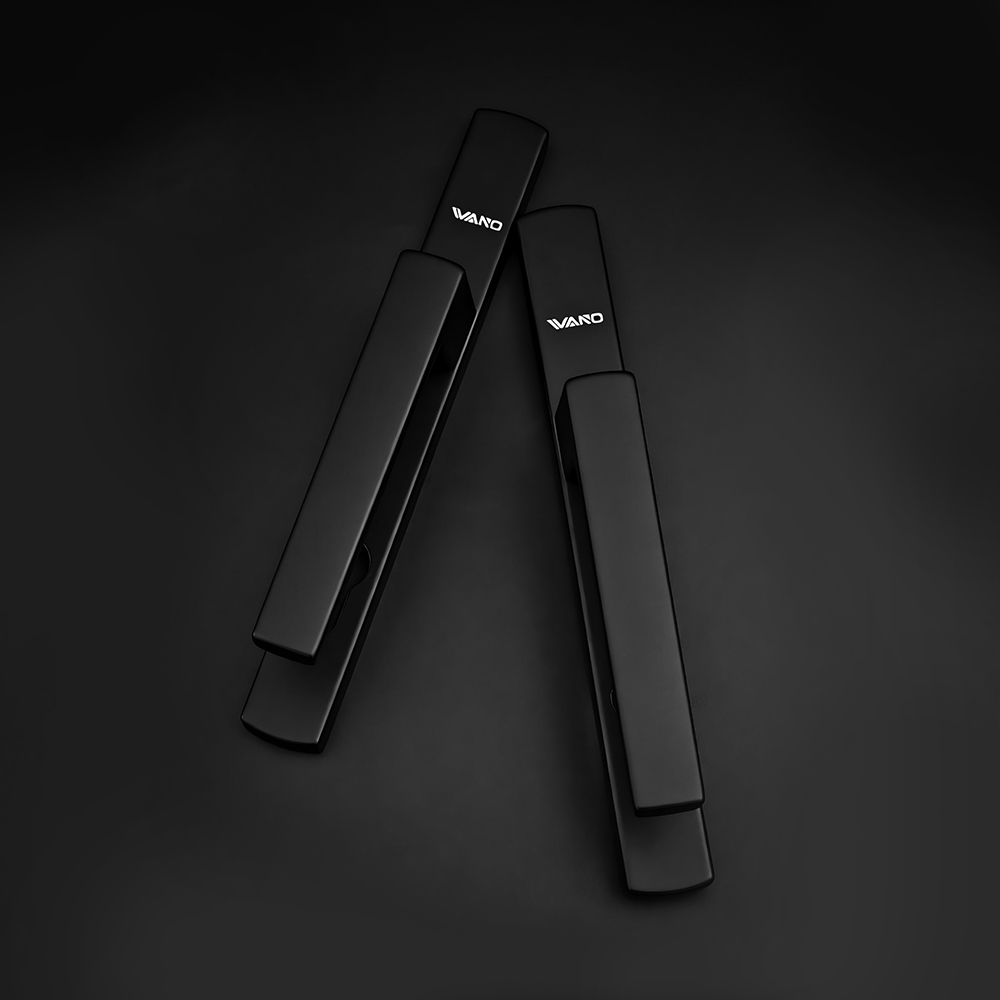
Handles are the part of the door that users touch every day, so they affect perceived quality more than any other component. The practical choices are lever handle, pull handle or ladder pull, and flush pull.
Lever handles for operated doors
Lever handles are the standard where a latch has to be retracted. For accessibility, a lever should be usable with one hand and without tight gripping or twisting. In the United States, accessibility rules set the operating height between 34 and 48 inches (about 865 to 1220 mm) above the floor and limit the force to open an interior door to about 5 pounds. Mounting the lever centreline near 1000 mm satisfies most national rules. Handles that return to a horizontal position under spring force reduce sagging, a common complaint on cheaper sets.
Pull handles for shopfronts and offices
Pull handles range from about 300 mm to 1200 mm and longer. The longer the pull, the more comfortable it is for users with luggage or carts, but the more important the fixings become. On aluminium doors the best approach is through-bolting with the handle fixed from both sides, or using a back-to-back pair, because a screw tightened into a 1.5 mm wall can strip after repeated use. Where a through-bolt is impossible, use rivet nuts or threaded inserts that spread the load across the wall.
Flush pulls for sliding doors
Sliding doors need recessed handles that do not collide with the opposite leaf or the track. A cut-out of 30 to 40 mm depth is common, and the profile must be reinforced so the cut does not weaken the stile. Specify the cut-out dimensions with the door manufacturer rather than at site.
Locks and Multipoint Systems for Aluminium Doors
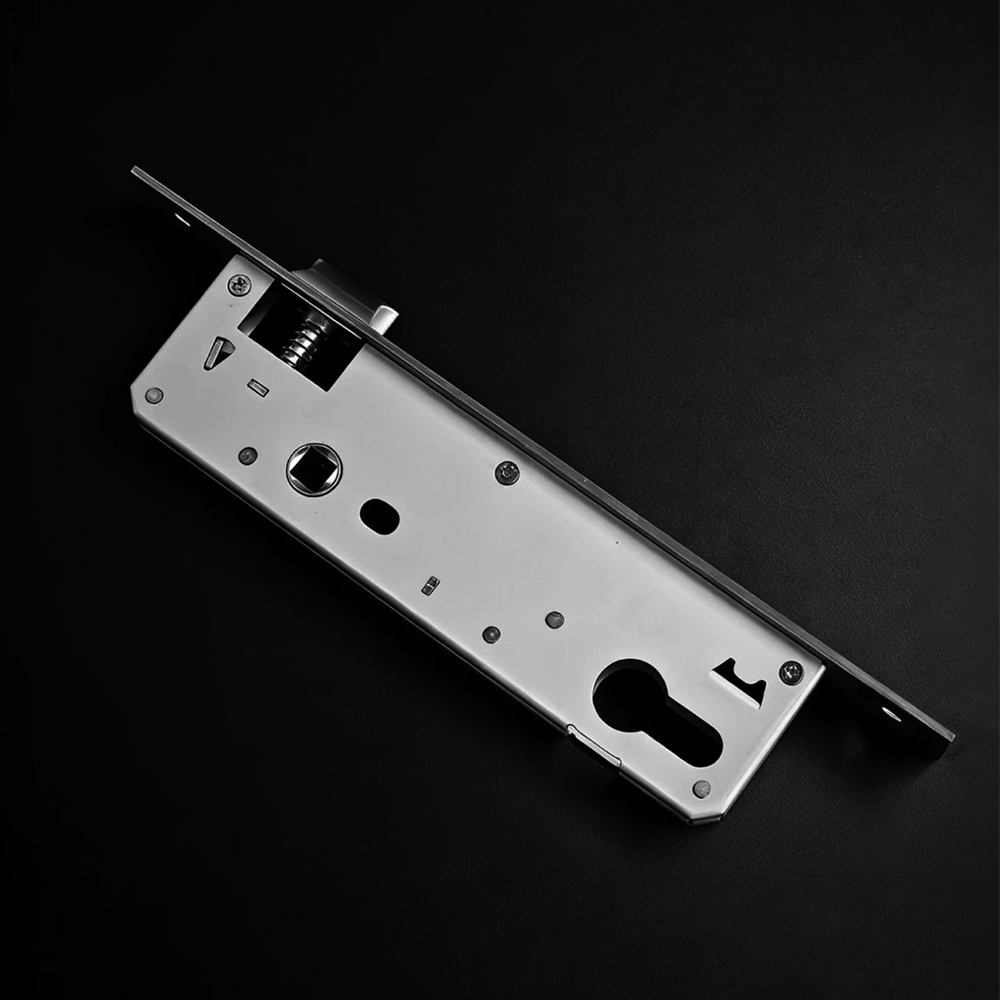
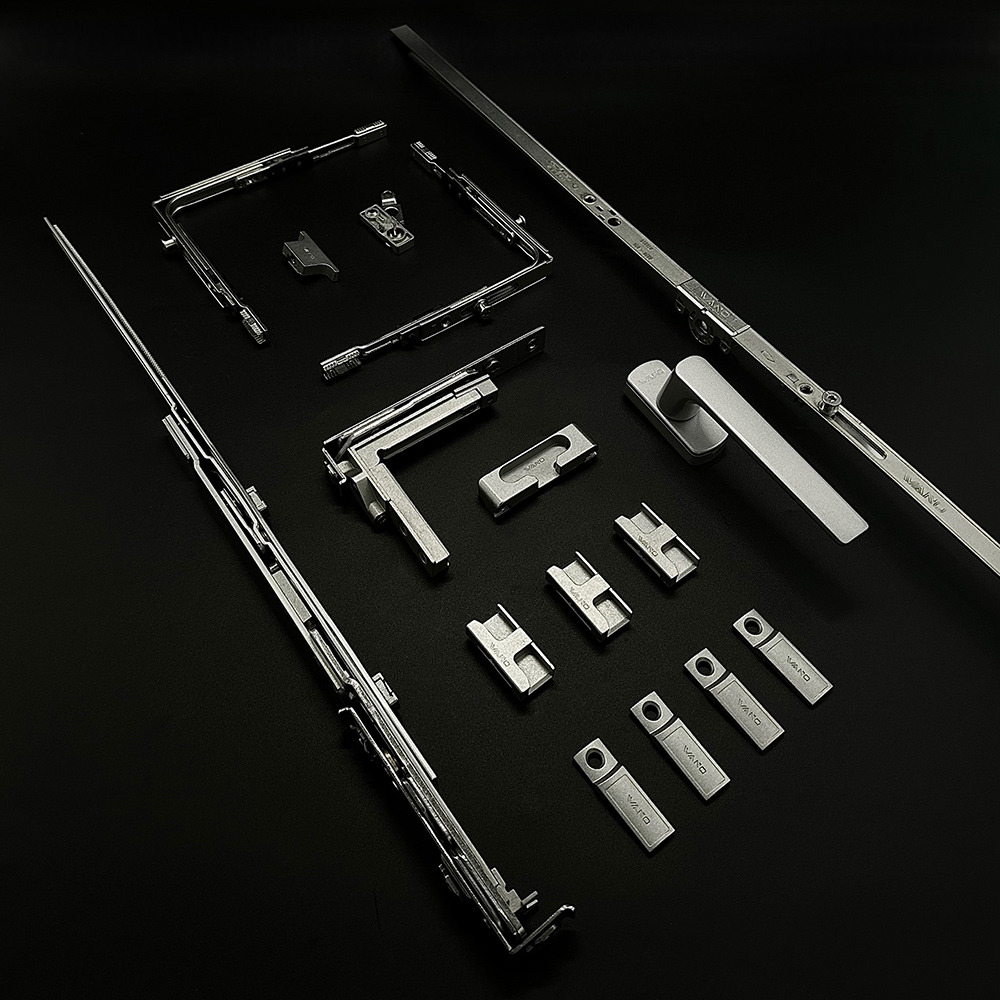
The lock sets the security level of the door, and for aluminium doors the choice usually comes down to a single-point mortise lock or a multipoint system. A mortise lock sits in the stile, and the bolt engages in the frame at one position. A multipoint lock adds hooks or bolts at the top and bottom, driven by a long gearbox and rod inside the stile, so the leaf is pulled tightly against the frame along its full height.
Multipoint locking brings two benefits that matter on aluminium. First, it reduces the warping that tall, thin doors develop under temperature changes and wind pressure, because the leaf is held at three or more points. Second, it raises burglary resistance. Under the common European resistance standard for burglar-resistant doors, class RC2 doors resist attack by an opportunist with simple tools for about three minutes, and RC3 for about five minutes. Reaching those classes with a single bolt is difficult, while a properly set multipoint lock combined with a protected cylinder can reach them.
- Cylinder protection. Choose cylinders with anti-snap, anti-bump and anti-drill features, and make sure the cylinder does not protrude more than about 3 mm beyond the handle escutcheon, because a protruding cylinder is the easiest point to snap.
- Door height. For leaves above roughly 2 metres, use hooks or bolts at the top and bottom, not only a centre bolt, so the leaf cannot bow away from the frame.
- Bolt throw. Check that the keeps in the frame match the bolt throw, which is often around 20 mm, and that the frame has a reinforced chamber behind the keep.
- Electronic options. Where access control is planned, specify the lock with an integrated electric strike, electromechanical lock or sensor, and confirm power and cable paths in the profile.
Hinges, Pivots and Rollers That Carry the Door Weight
Hanging hardware carries the whole weight of the leaf and the loads of repeated use, so it deserves more attention than its low cost suggests. The type depends on the door.
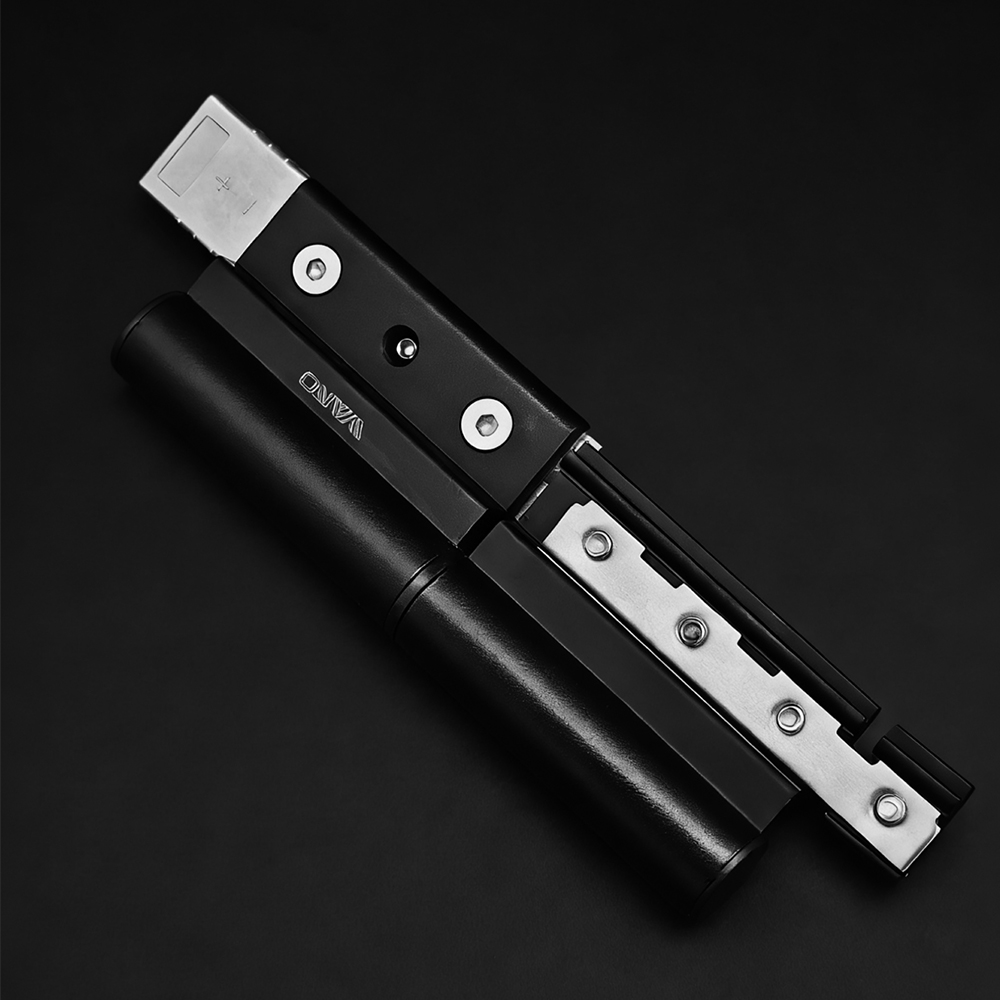
Butt hinges
For residential and light commercial doors, a set of three butt hinges is a common starting point. A widely used rule of thumb is one hinge for every 30 to 40 kg of leaf weight, plus a third hinge once the leaf reaches about 1.8 m or more, but always confirm against the rated load printed by the hinge supplier. Hinges with adjustable pins allow vertical and lateral adjustment, which is useful because aluminium leaves settle slightly after installation.
Geared or continuous hinges
For busy storefronts, a full-height geared hinge spreads the load along the whole stile, which avoids concentrated stress at three hinge points. The cost is higher, but on doors that cycle hundreds of times a day, the longer service life usually offsets it.
Pivots and floor springs
Offset pivots at the top and bottom suit glazed aluminium doors in commercial entrances, and are often combined with a floor spring or overhead closer. Check the rated leaf weight and width, because pivots are limited by both.
Sliding rollers
For sliding aluminium doors, rollers and tracks determine how smoothly the door runs for years. Look for stainless steel or high-grade polymer wheels with sealed bearings, vertical height adjustment, and an anti-lift device to stop the leaf from being lifted out from outside. Use a stainless steel track insert for heavy leaves, because soft aluminium tracks wear grooves under steel wheels.
Door Closers and Exit Devices on Aluminium Entrances
Closers make sure the door shuts and latches without help. Overhead closers are sized by the width and weight of the leaf. Under the European closer standard, size 3 suits leaves up to about 950 mm wide, size 4 up to 1100 mm, size 5 up to 1250 mm, and size 6 and 7 up to 1400 and 1600 mm. Using a closer one size too small is a classic mistake that causes doors to stop short of the latch.
| Application | Suggested hardware | Key point to confirm |
|---|---|---|
| Shopfront entrance | Pull handle, mortise lock, geared hinge or pivot, overhead closer | Closer size matched to leaf width, finish thickness 20 µm or more |
| Office internal door | Lever handle, latch, three butt hinges, concealed closer | Handle height and one-hand operation |
| Residential front door | Pull handle, multipoint lock, protected cylinder, adjustable hinges | Burglary resistance class and cylinder protrusion |
| Emergency exit | Push bar or push pad exit device, closer | Compliance with the exit device standard for the type of occupancy |
| Sliding patio door | Flush pull, hook lock, adjustable rollers, anti-lift | Roller load rating and track material |
| Coastal building | 316 stainless components, anodized or marine-grade coated aluminium | Top corrosion grade and thicker film |
On escape routes, choose the exit device by who will use it. A panic exit device with a push bar suits public buildings where occupants are unfamiliar with the doors, while an emergency exit device with a lever or push pad suits places where users know the building. Both sit on the stile, so the profile width again decides which product fits.
Fire-rated doors are a special case. Aluminium melts at about 660 °C, which is well below the temperatures in a developing fire, so fire-rated aluminium doors rely on tested assemblies with steel or stainless steel hardware and fire-resistant glazing. Never substitute hardware on a fire door without checking the tested assembly report.
Anodized or Powder Coated: Choosing the Finish and Its Thickness
Finish determines how the hardware looks after five or ten years, and it varies more than most buyers expect. The two main options for aluminium hardware are anodizing and powder coating.
Anodizing converts the surface of the metal into a hard aluminium oxide layer. The layer is part of the metal, so it does not peel, and it holds up well under sunlight. Anodic film is specified by thickness: about 10 microns for interior use, 15 microns for light exposure, 20 microns for general exterior use, and 25 microns for harsher or coastal environments. Powder coating adds a polymer layer of about 60 to 80 microns, which gives a wide colour range and a thicker barrier, but the layer sits on the surface and can chip at impact points such as handle edges.
The practical rule is to match finish to the exposure. Anodizing is the better choice where a metallic look, abrasion resistance and long-term colour stability are important, for example on handles that are touched all day. Powder coating suits colour matching and large surfaces. In either case, ask for the film thickness as a measured value and for confirmation that anodic film is properly sealed, because unsealed film absorbs dirt and loses its appearance quickly.
Corrosion Grades That Predict Real-World Durability
Salt spray testing gives a repeatable way to compare finishes. Under the common European standard for corrosion resistance of building hardware, finishes are graded from 0 to 5, each grade requiring a longer exposure in a neutral salt spray chamber without defects.
Choosing a grade that is two steps higher than the site requires is cheap insurance. Within about a kilometre of the sea, or beside indoor swimming pools where chlorinated air is corrosive, specify grade 5 hardware, 316 stainless fasteners and a thicker anodic film. For dry interiors, grade 3 is generally enough.
Thermal Movement and Why Aluminium Doors Need Clearances
Aluminium expands about 23 millionths of its length for each degree of temperature change, compared with about 17 millionths for stainless steel. On a door 2.1 m high, a 50 degree swing between a cold night and a hot, sun-struck afternoon moves the aluminium leaf by roughly 2.4 mm, while the steel rods and bolts inside it move by about 1.8 mm. The two parts do not move together, so the clearance has to absorb the difference.
A fraction of a millimetre sounds trivial, but it is the reason multipoint lock rods bind in summer on poorly set doors, and why keeps that were perfectly aligned in spring rub on the bolt in July. The remedy is to leave a bolt throw and keep opening with adjustment of at least 2 to 3 mm on each side, and to use hardware with adjustable keeps and hinges. Dark-coloured finishes absorb more heat, so a black powder-coated door in direct sun may run 20 to 30 degrees hotter than a pale one, which pushes the temperature swing toward the upper end of the chart.
Installation Mistakes That Shorten Hardware Life
Most hardware failures on aluminium doors can be traced to a handful of avoidable installation errors.
- Overtightening into thin walls. Profile walls of 1.5 to 2.0 mm cannot hold a screw tightened hard. Use through-bolts, sleeve nuts or threaded inserts, and tighten to the supplier's torque value.
- Mixing incompatible metals. Aluminium in contact with copper alloys or plated carbon steel in damp conditions corrodes at the contact. Use stainless steel fasteners and isolate with plastic washers or sealant where the site is wet.
- Drilling after finishing. Holes drilled in an anodized or powder-coated profile expose bare metal. Seal drilled holes with an approved touch-up product, and drill before finishing where possible.
- Skipping the template. Cut-outs for lock cases and rods must match the template. Cutting by eye leads to oversize openings that loosen fixing points over time.
- Ignoring door weight. Replacing a plain leaf with a heavier glazed one without changing the hinges is a common cause of dropped doors.
- Closer set too fast. A closer that slams the door shocks the lock and the fixings. Accessibility rules require at least five seconds for the door to swing from 90 degrees to 12 degrees in many jurisdictions, and that speed is gentler on hardware too.
A Simple Maintenance Routine for Aluminium Door Hardware
Aluminium hardware is low maintenance, but not no maintenance. A short routine each quarter and a deeper check each year keeps the system working and protects warranty claims.
| Task | Frequency | How to do it |
|---|---|---|
| Clean handles and plates | Monthly in public buildings, quarterly elsewhere | Wipe with a pH neutral cleaner between pH 5 and 8, then rinse and dry. Avoid alkaline and acidic cleaners, which attack the anodic film |
| Check fixings | Quarterly | Test that handles, pulls and strike plates are tight and do not rock |
| Lubricate hinges and pivots | Every 6 to 12 months | Apply a light PTFE or machine oil to pins and bearings, and wipe off excess |
| Treat cylinders | Yearly | Use dry graphite or PTFE spray in the keyway, never oil, which attracts dust |
| Clean sliding tracks | Quarterly | Vacuum debris from the track, wipe, and apply a dry lubricant to the rollers |
| Adjust closers | Yearly and after season changes | Check closing speed and latching action, because oil viscosity changes with temperature |
| Inspect finishes | Yearly in coastal sites | Look for pitting, white corrosion products or chipped coating, and treat early |
A useful habit is to open and close each door slowly, listening for scraping or sticking. Early resistance almost always points to a hinge that needs adjustment or a keep that has drifted, both of which cost minutes to fix before they cause damage.
How to Specify and Buy Aluminium Door Hardware With Confidence
For project buyers and contractors, a clear specification prevents most disputes. Ask each supplier to provide the same set of information so that quotations can be compared fairly.
- Material and alloy for each component, including the stainless steel grade of fasteners.
- Finish type and measured thickness, with sealing confirmed for anodized parts.
- Test reports showing corrosion grade, durability cycles and, where relevant, burglary resistance class or fire test reports.
- Rated loads for hinges, pivots, rollers and closers, together with the maximum leaf weight and width.
- Profile compatibility shown on drawings, including stile width, backset and chamber depth.
- Samples of the handle, lock and hinge, assembled on an actual profile section so fit and feel can be checked before the full order.
- Spare parts and warranty terms, since matching a discontinued handle or keep years later is difficult.
As a cost guide, hardware is usually a small portion of a door's total price, yet it drives most callbacks. Spending a little more on certified, correctly finished components typically costs far less than a single return visit to re-hang doors, replace corroded handles or re-cut keeps across a building.
Frequently Asked Questions
What is aluminium door hardware made of?
Handles, pulls and cover plates are often extruded or cast aluminium alloy, while load-bearing parts such as hinges, bolts, rods and lock cases are typically stainless steel, steel or zinc alloy finished to match the door. The best combination depends on the load and the environment, so check the material of each part and not only the visible handle.
How thick should the anodized finish be on exterior aluminium door hardware?
For general exterior use, an anodic film of at least 20 microns is a common requirement, and 25 microns is recommended for coastal or industrial sites. Interior hardware can use about 10 microns. Ask for measured thickness and confirmation that the film is sealed.
Can stainless steel screws be used with aluminium door hardware?
Yes, and they are the usual choice because they resist corrosion. Because stainless steel and aluminium can interact in wet conditions, keep the contact area small, isolate with washers or sealant where moisture is present, and avoid using plated carbon steel or brass fixings against the aluminium.
Which lock is best for tall aluminium doors?
For leaves taller than about 2 metres, a multipoint lock with hooks or bolts at the top and bottom is the better choice. It holds the leaf along its full height, limits warping from temperature and wind, and can reach higher burglary resistance classes when paired with a protected cylinder.
How do I stop aluminium door hardware from loosening over time?
Fix handles with through-bolts, sleeve nuts or threaded inserts, because screws cut directly into a 1.5 to 2.0 mm profile wall strip under repeated use. Tighten to the torque value given by the supplier, apply thread-locking compound where vibration is expected, and check fixings every quarter.